



By Chris Onuoha
Lighting designer Godwin Emefe has received glowing commendation for his work on Dave’s recently concluded Lagos presentation of The Boy Who Played the Harp, staged at the National Theatre, now the Wole Soyinka Centre for Culture and Creative Arts.
The tribute came from Teju Wasee Kareem, Founder and Chief Executive Officer of Zmirage Multimedia Ltd, who described Emefe’s lighting as the visible pulse of the performance.
“Dave brought the music. Godwin Emefe gave that music a visible pulse,” Kareem wrote in a commendation titled, Dave, the Boy Who Played the Harp; Godwin, the Man Who Played the Light.
He said the production, presented by Live Nation and MASSIVE, demonstrated how sound and light could enter “a conversation worthy of remembrance.”
Kareem traced Emefe’s development to his Theatre Arts education at the University of Ibadan, where he specialised in design, and to his long association with Zmirage Multimedia.
He said Emefe’s apprenticeship exposed him to the practical demands of musical productions, drama performances, religious gatherings and live presentations, helping him turn theoretical knowledge into professional judgment.
“Working alongside me, he learned the discipline behind the spectacle: preparation, attention, patience and the responsibility of delivering when the audience is seated and the performance must begin,” Kareem said.
The Zmirage chief also placed Emefe’s growth within Nigeria’s wider technical theatre tradition, citing Dr Sumbo Marinho, Professor Duro Oni and Dr Alphonsus Orisaremi as major figures in the field.
He described Emefe’s work at the National Theatre as evidence that the lighting designer had moved beyond being a promising practitioner to an accomplished artist.
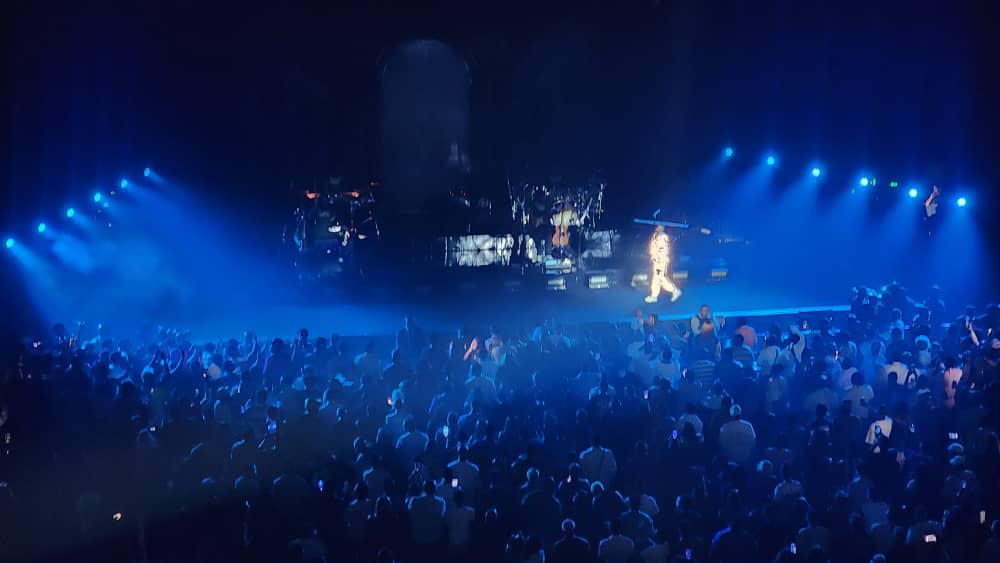
Kareem praised Emefe’s musical sensitivity, saying his cues responded to the shape and intention of Dave’s performance.
“He could recognise a phrase gathering strength, prepare the eye for its arrival, and give its release the space it deserved,” he said.
According to Kareem, Emefe demonstrated “timing as interpretation,” knowing when to gather light, strike a cue, sustain an atmosphere and allow an image to breathe.
He also commended the lighting designer’s handling of Dave as the central performer, noting that he preserved the hierarchy of attention in a production of large scale.
“Godwin maintained the hierarchy of attention. He understood when the audience needed the intimacy of a face, the presence of a body, the concentration of a single voice,” Kareem said.
He added that when the chorus required breadth, the visual field opened with it, while the lighting restored concentration whenever the music returned to a personal register.
Kareem said Emefe’s use of angles, colour, movement and intensity gave bodies contour, separated figures from their surroundings and created legible depth on stage.
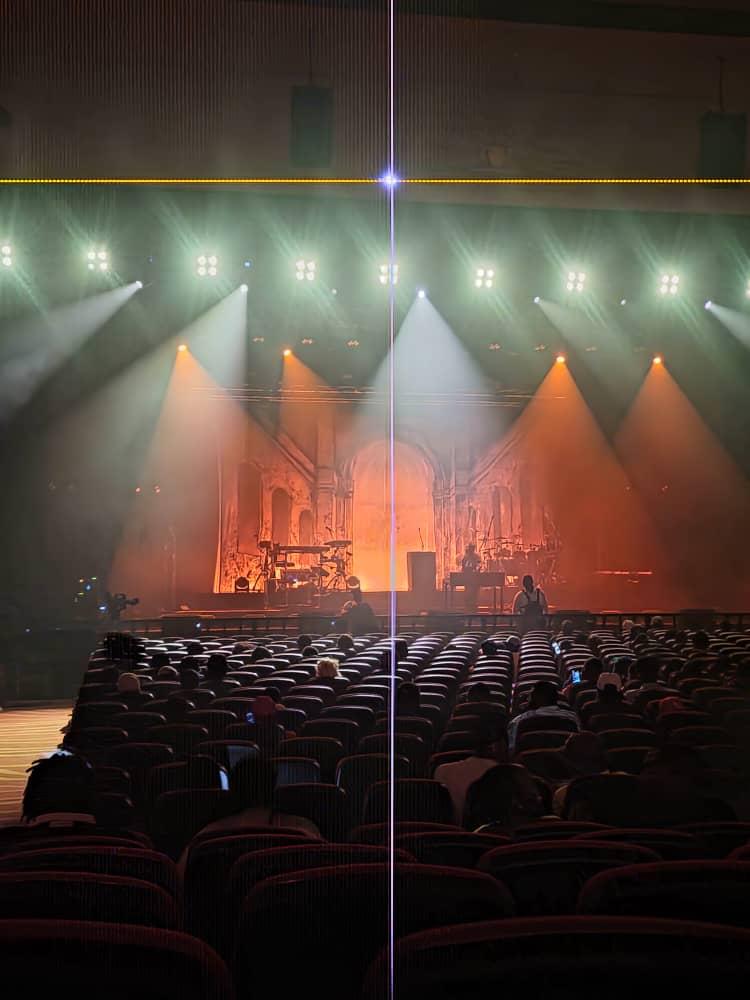
“Light became a sculptural material,” he said. “The performer occupied a shaped space, with weight, dimension and presence.”
He described the evening’s “wow” as the recognition that “the light understood the music,” adding that Emefe’s maturity lay in his ability to choose restraint where necessary.
“A powerful lighting rig invites its operator to keep proving its power. Godwin’s maturity appeared in his ability to choose: to release energy, sustain an atmosphere, direct attention and allow the performer room to lead,” Kareem said.
He likened Emefe at the console to a musician playing an instrument, saying the artistry lay in the decisions passing through the machine.
“Godwin has travelled well beyond the comfortable description of a rising star. What I witnessed deserves the recognition given to an accomplished practitioner who has earned his place through sustained work,” Kareem said.
Emefe serves as Head of the Lighting Team and Assistant Lighting Programmer for Live Nation, as well as Head of Lighting for MASSIVE.
Kareem also praised the contributions of other members of the production team. He commended Natasha Adebisi for her scenic sensibility, saying her background in interior design helped shape the relationship between space, texture and arrangement.
“Natasha deserves warm recognition for the world she helped create around the music,” he said.
He also acknowledged lighting operator Charlie LaPage Norris, whose execution, he said, helped the production’s visual language arrive with clarity.
“A lighting vision reaches the audience through execution: the precision of a cue, the sensitivity of a transition, the steadiness with which intention becomes performance,” Kareem said.
The Zmirage boss further applauded Team A of Zmirage Multimedia, the resident technical team at the National Theatre, for providing the technical foundation for the event.
He said the team’s attention to detail, safety, professional conduct and support for visiting engineers helped protect the venue and sustain production standards.
“Long before an audience encounters the finished performance, a resident team must understand the building, recognise its limits, safeguard its systems and help visiting practitioners realise their ambitions within it,” Kareem said.
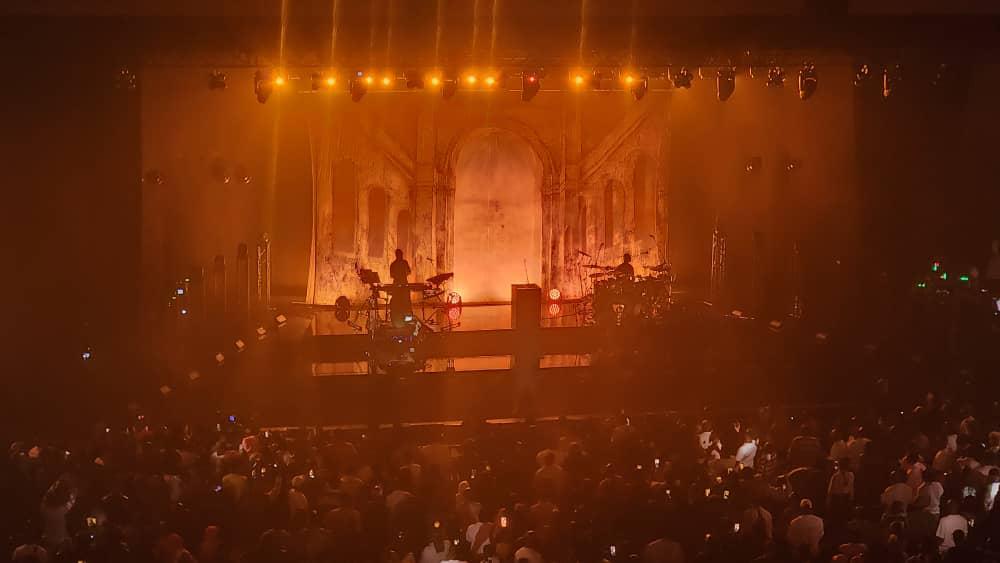
He credited the Managing Director of the National Theatre, Erelu Ajua Badebo, with establishing a dependable resident technical framework that has supported successive productions since the Main Bowl resumed hosting events.
“Placing responsibility in capable hands, supporting professional standards and creating the conditions in which artistic ambition can flourish” were among the decisions he said had strengthened the institution.
Kareem concluded by celebrating Emefe’s discipline, listening and visual expression.
“Dave gave us The Boy Who Played the Harp. Godwin, you gave us the man who played the light. And the light answered,” he said