


By Henry Igwebuike
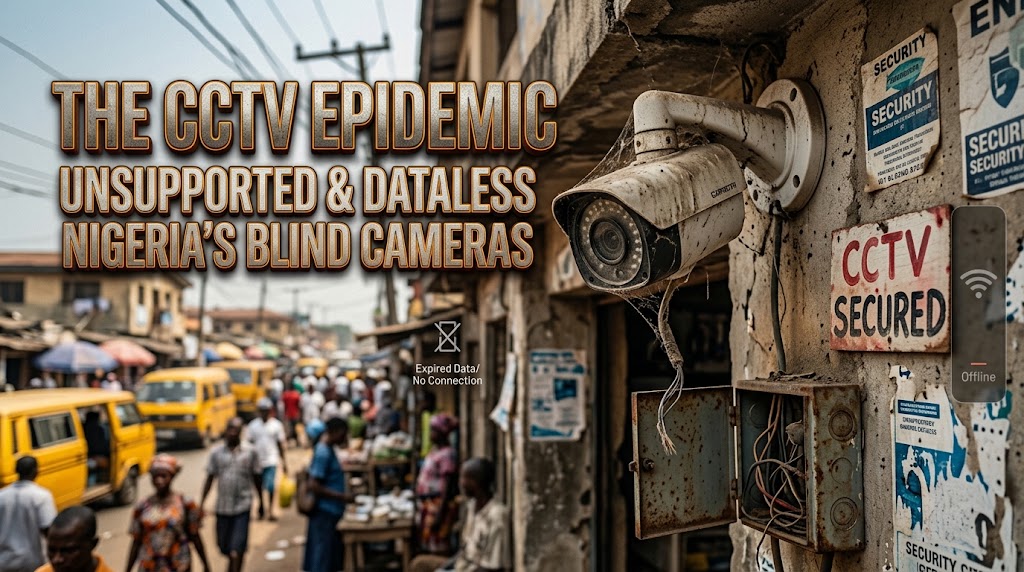
Across Nigeria’s urban centers, closed-circuit television (CCTV) cameras have rapidly become a standard fixture on the facades of commercial hubs, private residences, educational institutions, and industrial facilities. Prompted by rising security concerns, property owners increasingly view surveillance hardware as an indispensable first line of defense. However, this aggressive deployment masks a critical systemic failure. While the physical presence of cameras creates a comforting illusion of vigilance, a vast majority of these systems exist in a state of functional abandonment, rendered useless at the precise moment they are needed most.
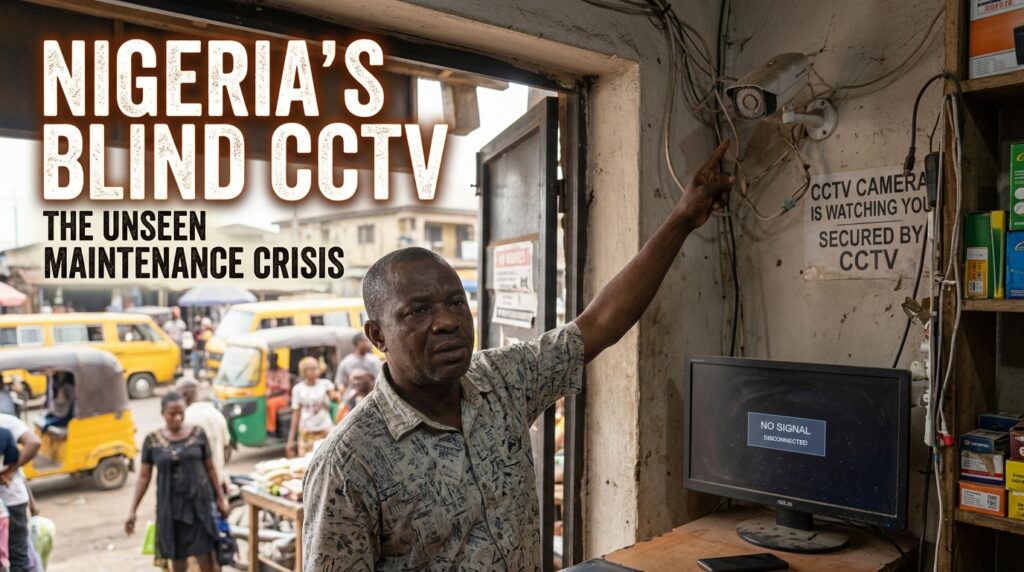
The central flaw in Nigeria’s security surveillance boom lies in the neglect of ongoing operational maintenance, particularly the management of network data. Unlike localized analog systems of the past, modern IP-based cameras and remote monitoring systems depend heavily on continuous internet connectivity to upload footage to cloud storage, send real-time alerts, or allow off-site access. The fundamental nature of surveillance dictates that raw footage remains unexamined for long stretches, carrying no perceived value until a crisis—such as a break-in, asset theft, or safety breach—occurs. It is only during these critical post-incident investigations that property managers confront a frustrating reality: the camera was powered on, but data subscriptions had expired months prior, leaving the storage drives empty and the event unrecorded.
This maintenance breakdown highlights a deeper structural mismatch between high-tech infrastructure and the socio-economic realities of the nation. For a significant portion of Nigerian business owners and households, economic survival dictates a strict prioritization of daily essential expenditures, primarily food, power generation, and immediate operational overhead. In an environment shaped by relentless inflationary pressure, recurring line items like automated software renewals and monthly data tariffs for security devices are frequently treated as non-essential expenses. Consequently, security installations degenerate into passive architectural ornaments—deterrents in appearance only, but functionally blind.
Furthermore, the absence of standardized regulatory frameworks worsens the situation. Without enforced compliance standards requiring regular audit logs or operational uptime for commercial and public-facing cameras, there is little incentive for property administrators to maintain active data links. The prevailing approach to security remains reactive rather than preventive, focusing heavily on the initial capital outlay of purchase and installation while completely ignoring the recurring operational expenditure required to keep the system running.
To transform CCTV technology from a cosmetic reassure-measure into an effective security tool, Nigeria must bridge the gap between technological capability and economic sustainability. Solution providers must innovate by offering low-bandwidth, localized storage solutions that reduce dependence on constant high-cost cellular data. Simultaneously, property owners must recognize that a camera without active data and routine maintenance offers no real protection. Until the culture shifts from merely installing surveillance hardware to actively sustaining it, the country’s growing network of cameras will remain a silent, ineffective witness to the very incidents it was bought to prevent.