


By Henry Igwebuike
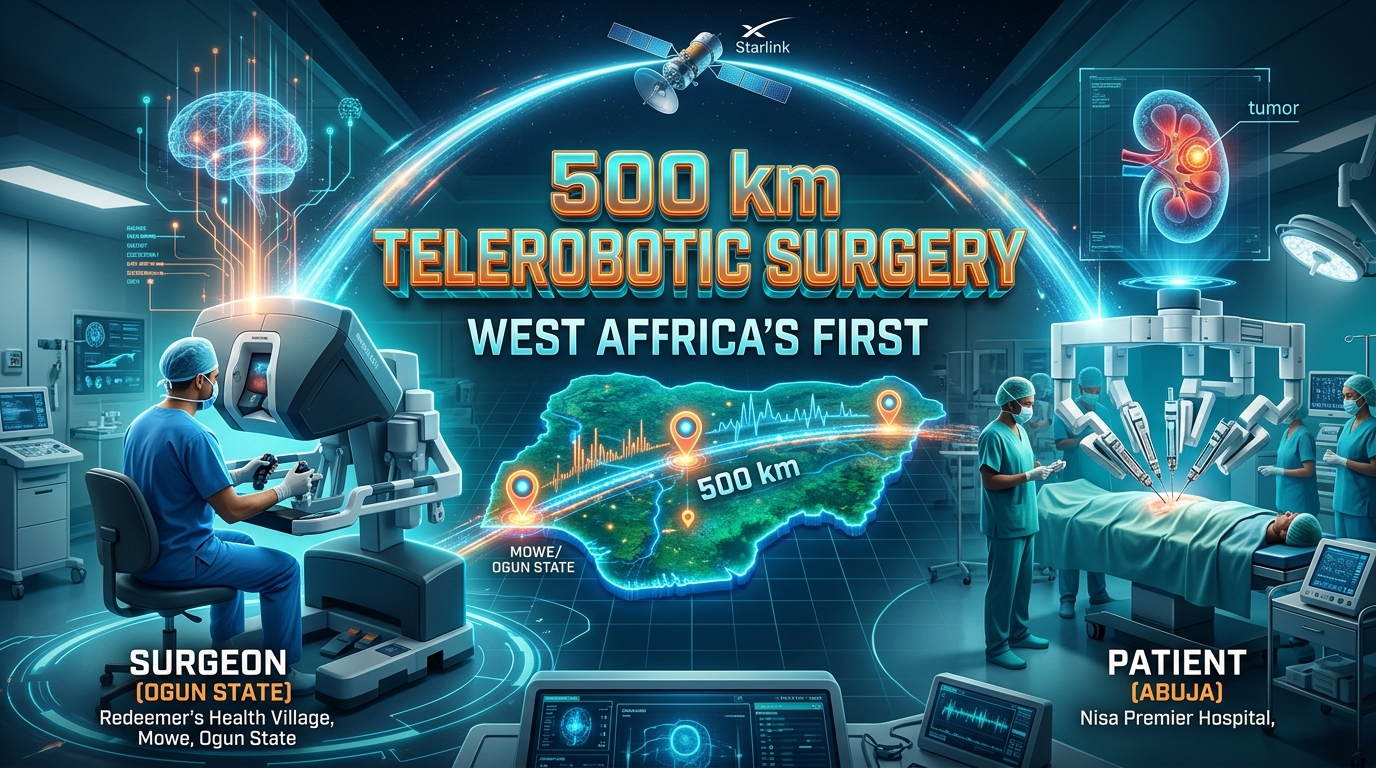
At Redeemer’s Health Village in Mowe, Ogun State, a surgeon seated at a master console manipulated articulated controllers while watching high-definition, three-dimensional video feed. Five hundred kilometres away, in an operating theatre at Nisa Premier Hospital in Abuja, a patient lay prepared for a radical nephrectomy to remove a cancerous kidney tumor. Between the surgical console and the micro-instruments inside the patient’s abdomen lay the vast expanse of Nigerian geography, connected seamlessly via a high-speed satellite link. By successfully dissecting delicate tissue around the affected kidney with sub-millimetre precision, the team executed West Africa’s first telerobotic surgery, marking a historic breakthrough for regional medicine.
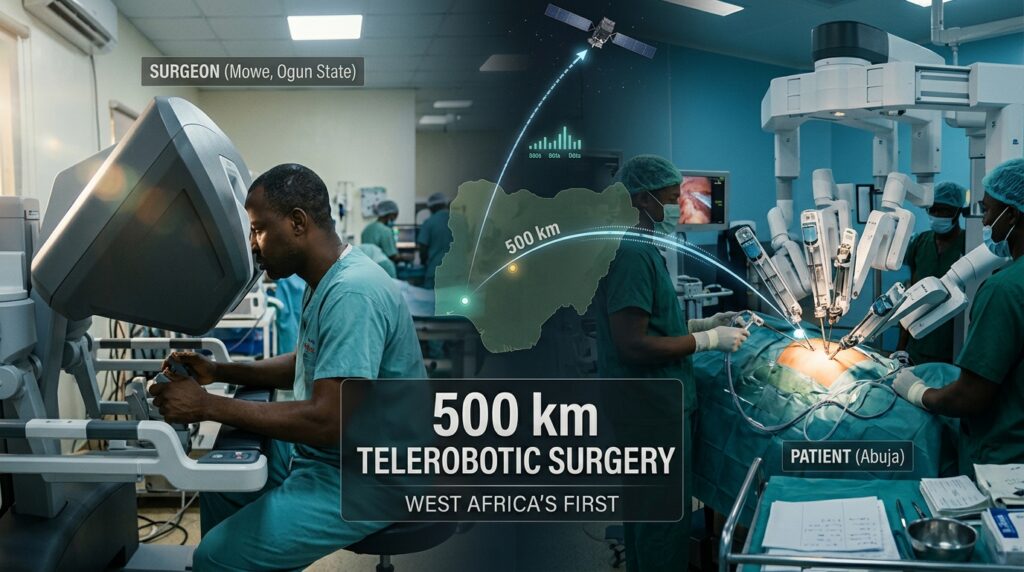
For decades, access to complex healthcare across West Africa has been heavily restricted by geography. Patients living in regional centers frequently had to travel vast distances or spend substantial financial resources seeking treatment abroad to access specialized surgical expertise. The successful completion of this 500-kilometre remote procedure demonstrates that geographical distance no longer needs to dictate clinical outcomes. With the patient stabilizing quickly and preparing for discharge within twenty-four hours, the milestone proves that modern precision healthcare can be delivered remotely across long distances without sacrificing patient safety or surgical control.
Beyond its immediate medical success, this achievement serves as a vital catalyst for the broader biotechnology ecosystem in Nigeria and Sub-Saharan Africa. Conducting real-time surgical interventions over long distances requires robust digital infrastructure, fault-tolerant data routing, and satellite connectivity capable of maintaining virtually zero latency. The successful integration of cloud-enabled medical devices across regions establishes a practical blueprint for digital health adoption, encouraging further investment in telecommunication networks and health technology platforms throughout the continent.
The expansion of telesurgery also offers a structural solution to the long-standing challenge of medical brain drain. Rather than requiring specialized surgical talent to be physically stationed in every major urban center, remote robotic consoles allow regional experts and diaspora specialists to consult and perform operations across national borders without leaving their primary institutions. This remote capability multiplies the reach of skilled practitioners and ensures that specialized knowledge remains active within the local healthcare network.
At the same time, maintaining and operating advanced surgical robotics fosters local technical capabilities beyond the operating room. High-tech medical equipment demands specialized biomedical engineering, ongoing software optimization, and dedicated system maintenance. Educational initiatives launched alongside this breakthrough, including dedicated training academies, aim to equip local professionals with the skills needed to support complex robotic systems. By combining advanced robotics with high-speed communications, Nigeria has demonstrated that West Africa can actively pioneer precision healthcare solutions tailored to its own geographic and logistical realities.
