

By Chris Onuoha
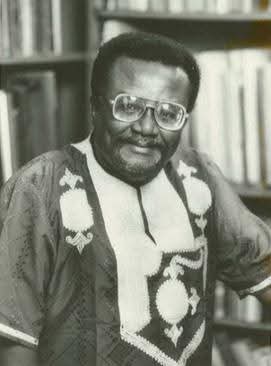
Professor Ola Rotimi was one of Nigeria’s foremost dramatists, theatre directors, and scholars. He was widely celebrated as a “complete man of the theatre” because he worked as a playwright, director, actor, choreographer, and stage designer. He revolutionised African stagecraft by bridging classical Western dramatic architecture with indigenous African performance traditions, choral aesthetics, and accessible, culturally rooted dialogue.
He was born Olawale Gladstone Emmanuel Rotimi in 1938 in Sapele, Nigeria. He was raised by a Yoruba father who directed amateur theatricals and an Ijaw mother passionate about drama. This intercultural heritage profoundly shaped his commitment to diversity. After attending St. Cyprian’s School in Port Harcourt, St Jude’s School in Lagos, and the Methodist Boys’ High School, Lagos, he travelled to the United States to study theatre. He earned a Bachelor of Fine Arts (BFA) from Boston University and a Master of Fine Arts (MFA) from the Yale School of Drama as a Rockefeller Foundation scholar.
When he returned to Nigeria, he joined the University of Ife (now Obafemi Awolowo University), where he founded the experimental Ori Olokun Acting Company. He later chaired drama departments at the University of Port Harcourt and taught abroad at institutions like Macalester College before returning to lecture at Ife until his passing in 2000. Rotimi was a two-time Fulbright Scholar renowned for his mastery of Nigerian Pidgin, expressive proverbs, and crowd-directing techniques.
His drama frequently excavated African historical upheavals, interrogated the responsibilities of political leadership, and engaged ordinary communities directly in the performance space. He is best known for his influential tragedies, historical dramas, and political satires:
- The Gods Are Not to Blame (1968)
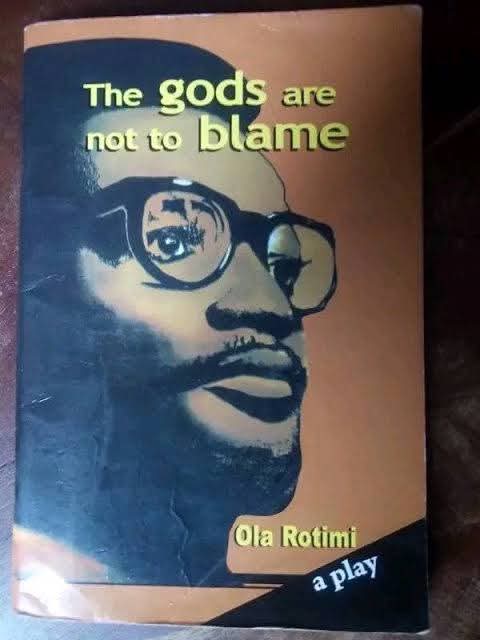
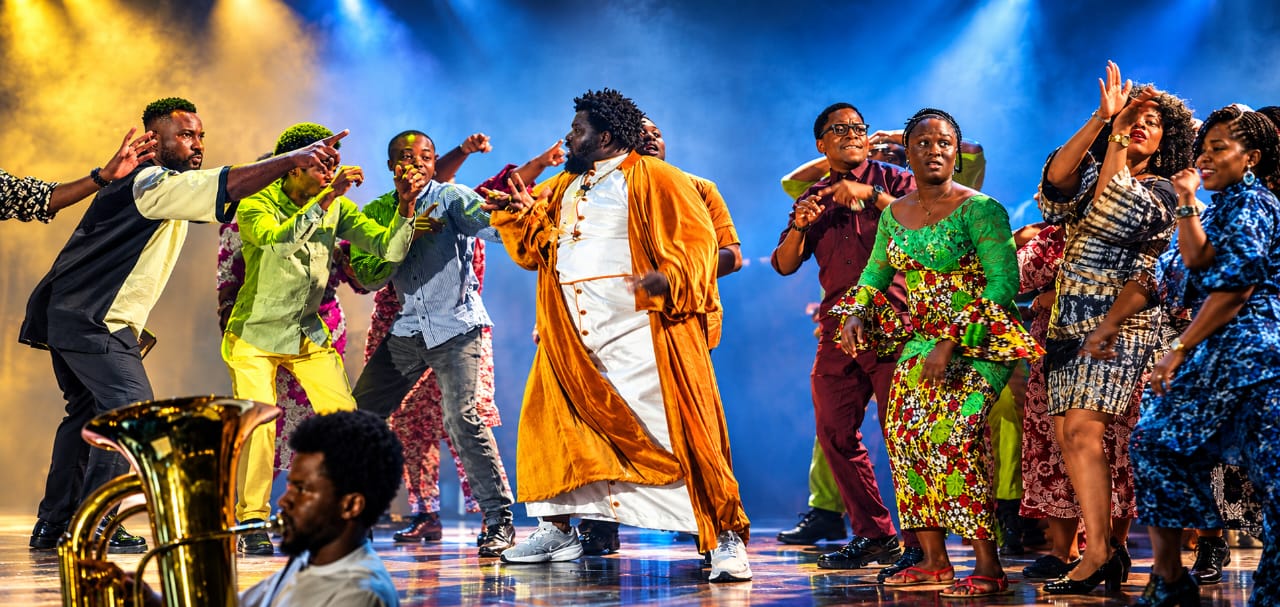
The Gods Are Not to Blame is Rotimi’s celebrated tragic masterpiece. It transposed Sophocles’ ancient Greek tragedy Oedipus Rex into the cultural and political universe of the Yoruba kingdom of Kutuje. The plot follows Odewale, a valiant warrior who delivers the troubled land of Kutuje from its invading enemies and is crowned king in gratitude, marrying the widowed queen, Ojuola. However, when a mysterious plague falls upon the realm, an oracle reveals that the curse will only lift when the murderer of the former king, Adetusa, is unmasked and banished. Odewale will discover through agonising revelations that his quick temper and pride sealed his doom; that he himself is the long-lost cursed son destined to kill his father and marry his mother. The play is a profound allegory on personal responsibility, tribalism, and the destructive arrogance of leaders who blame outside forces for catastrophes of their own making.
- Our Husband Has Gone Mad Again (1966)
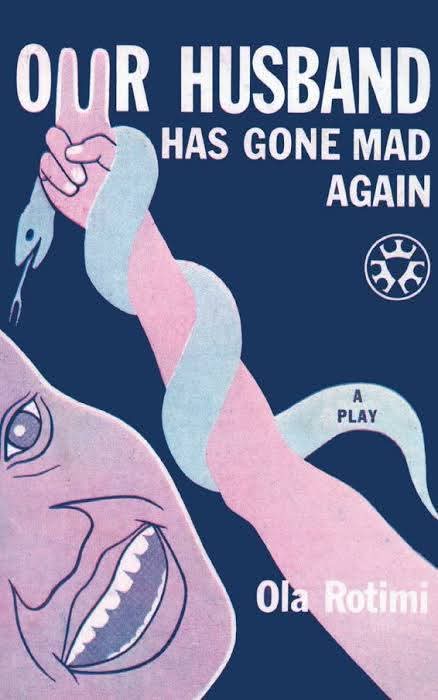
Our Husband Has Gone Mad Again is a riotous political satire originally written during Rotimi’s student days at Yale. The play follows Major Rahman Lejoka-Brown, a boastful cocoa farmer and retired military officer who enters civilian politics with the sole motive of acquiring wealth, prestige, and power. To consolidate the grassroot voting bloc, he contracts a traditional marriage with Sikira, the daughter of an outspoken powerful market women leader, who joins Mama Rashida as one of Major’s wives. His political campaign collapses into domestic anarchy when his sophisticated, American-educated first wife, Liza, returns unexpectedly from abroad to find a polygamous household. In the play, Rotimi satirises opportunism, electoral vanity, and the hollow rhetoric of military men masquerading as democratic saviours.
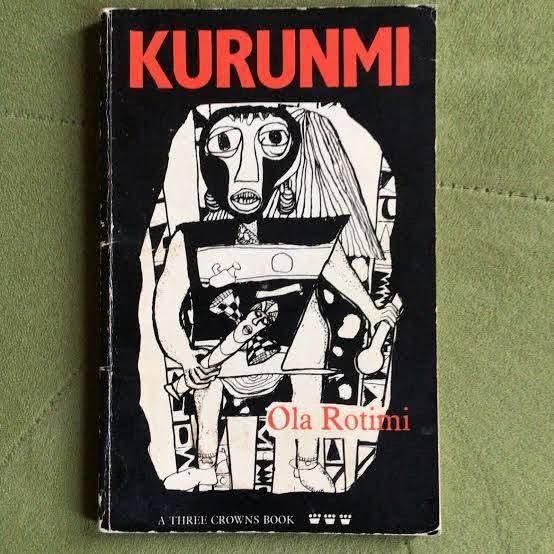
- Kurunmi (1969)
Kurunmi is a gripping historical tragedy based on the nineteenth-century Ijaye-Ibadan war. The drama centres on the unyielding General Kurunmi, the revered Aare Ona Kakanfo (Generalissimo) and custodian of traditional governance in Ijaye. When Alaafin Atiba of Oyo breaks long-standing tradition by naming his son Adelu as his immediate successor, Kurunmi fiercely resists, regarding the break with custom as an affront to ancestral law. His obstinate defence of sacred tradition pits him against the rising military might of Ibadan. As the war drags on and all five of his sons are slaughtered on the battlefield, Kurunmi’s tragic descent exposes the catastrophic perils of uncompromising pride, dogmatism, and the bloody cost of civil conflict.
- Ovonramwen Nogbaisi (1971)
Ovonramwen Nogbaisi is an epic historical drama that chronicles the 1897 British punitive expedition against the great Benin Kingdom. The play depicts Oba Ovonramwen Nogbaisi, the sovereign monarch of the Benin Empire, who struggles to assert his royal prerogative while navigating internal court intrigue, disobedient chiefs, and the predatory economic encroachments of British imperialists. When British envoys breach sacred traditions by attempting to enter the city during the Ague festival and are killed, Britain unleashes overwhelming military force, resulting in the sacking of the ancient capital, the looting of priceless bronze treasures, and the Oba’s heartbreaking surrender and subsequent exile to Calabar. The play offers a dignified, unsparing defence of indigenous African sovereignty and the tragic reality of imperialist conquest.
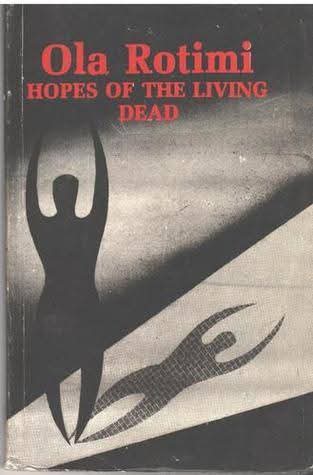
- Hopes of the Living Dead (1988)
Hopes of the Living Dead is an inspiring, collectivist political drama based on the actual 1928–1932 rebellion of Hansen’s disease (leprosy) patients in colonial Port Harcourt. Led by Ikoli Harcourt Whyte, an articulate and self-sacrificing inmate, the afflicted community revolts when the colonial government attempts to evict them from the General Hospital to face total neglect. The patients form an egalitarian union, crossing their ethnic, linguistic, and cultural divides. They use strikes, collective bargaining, and unwavering solidarity to demand humane treatment and secure land to establish a self-sustaining cooperative community. Rotimi shifts from traditional individualist tragedy to present a blueprint for grassroots democratic leadership and mass action.
Rotimi also wrote widely performed absurdist experiments, socio-economic dramas, and courtroom comedies:
- If: A Tragedy of the Ruled (1983) was first staged in 1979 and published in 1983. It is a multi-plot socio-political drama set in a low-income compound. It explores the struggles of everyday tenants against predatory landlords, electoral manipulation, and structural poverty.
- Holding Talks (1979) was first produced around 1970 and published in 1979. This absurdist drama satirises political apathy, intellectual prevarication, and the habit of talking endlessly while urgent social crises demand decisive action.
- The Epilogue (Man Talk, Woman Talk and Tororo, Tororo, Roro) is a pair of comedic satires staged and published around the close of his career, using humorous courtroom battles and popular Nigerian English to explore gender reconciliation and human coexistence.
#AfricanLiterature #OlaRotimi #newsnow.africa #arts&culture
*Culled from African Literature page, in promotion of African culture, heritage and values.
Chris Onuoha.